The first week of November 2026 delivered a strange combo: AI agents that might shop for you, a search giant telling schools to take AI or lose Search, and a publisher that keeps growing while search traffic keeps shrinking. Purple Crib Studios tracked the six stories that matter most for digital marketers across the US, UK, UAE, Canada, and Nigeria.
🚀 Too Busy to Track AI Marketing Every Week?
Purple Crib Studios turns each week's AI and marketing shifts into a clear action list for your business.
💬 Get Your Weekly Brief on WhatsAppTable of Contents
- AI Shopping Agents Put $74B of Retail Ads at a Crossroads
- Google's School Ultimatum: Block AI, Lose Search
- The NYT Playbook: Grow Subscriptions While Referrals Fade
- Alphabet's Biggest Search Risk Is Its Own AI
- AI Visibility Is a Consideration Play, Not a Traffic Play
- IAB: AI Adoption Accelerates, but Most Teams Still Lag
- What This Week Means for Marketers
- Five Quick Wins for Next Week
- Test Your Knowledge — Quiz
- FAQs
1. AI Shopping Agents Put $74B of Retail Ads at a Crossroads
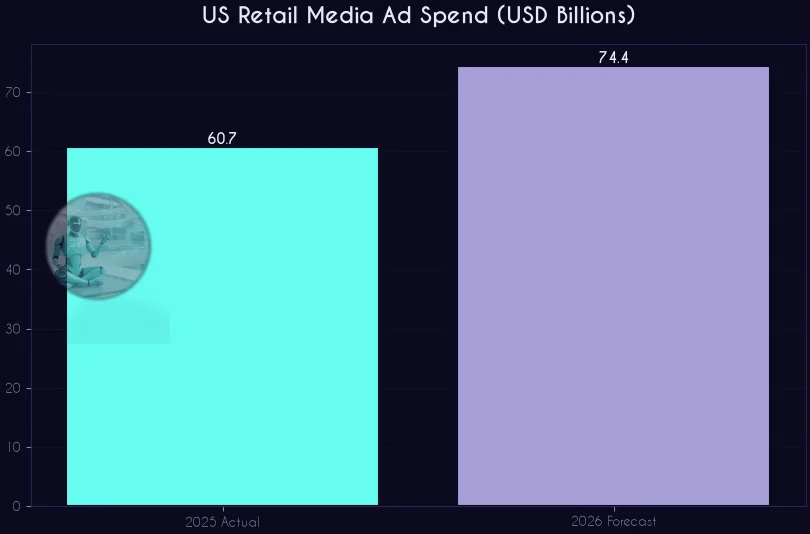
The biggest story of the week came from Reuters on November 4: the rise of AI-led shopping is posing a conundrum for Walmart and Amazon. Brands are expected to spend 22.6% more on retail media in 2026 than last year's $60.7 billion, per Emarketer forecasts, which puts the US retail media market at roughly $74.4 billion. Yet the same AI shopping agents that could unlock new convenience for shoppers could also threaten the ad businesses that depend on humans seeing, clicking, and impulse-buying.
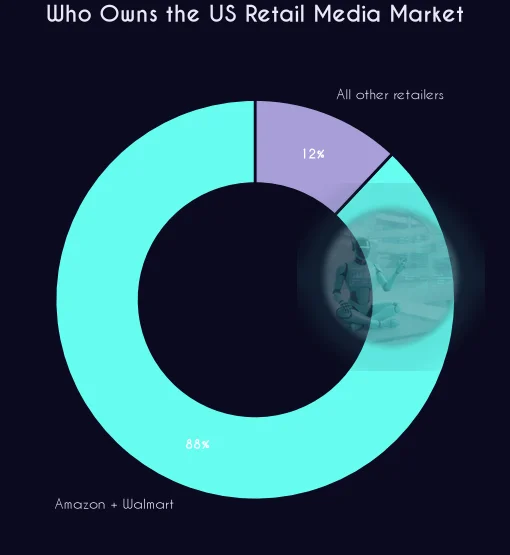
88% of the US retail media market belongs to just two retailers: Amazon and Walmart, together. When both face the same agentic-commerce question at once, the entire channel feels it.
The mechanics are simple and uncomfortable. Retail media ads sell human attention inside shopping journeys. If an AI agent does the browsing, comparing, and reordering, the "ad slot" moves from a page the human sees to an answer the agent reads. We covered the shift toward agents doing real work in November's agent economy trends, and this week the money finally started asking the same question.
2. Google's School Ultimatum: Block AI, Lose Search
On November 3, Google announced that generative AI tools will be off by default for school-managed K-12 student accounts next year. Schools can opt in, district by district. But there was a sting: districts that block AI entirely will also lose access to Google Search for those accounts, because Google says it will not maintain an AI-free version of the product.
The announcement triggered immediate backlash from parents and teachers, especially in California, where districts are now weighing whether accepting AI-integrated search is a price worth paying. Google is also piloting Guided Learning in Search and Classroom, designed to foster critical thinking with AI rather than replacing it.
Why marketers should care: an entire generation of students may grow up where AI-assisted search is the default and plain search is not even an option. Habit formation at that scale shapes the next decade of query behavior.
3. The NYT Playbook: Grow Subscriptions While Referrals Fade
The New York Times reported a story every content marketer should study. The company forecasts 15% digital subscription growth, added roughly 420,000 digital subscribers in the quarter, and now counts about 13.4 million total subscribers. At the same time, it openly acknowledged declining search and referral traffic from Google, and responded by accelerating investment in video.
The strategic read: when discovery traffic is no longer guaranteed, owning the audience beats renting it. The NYT is converting borrowed attention into direct relationships, and pricing subscriptions as the product rather than the byproduct of pageviews.
4. Alphabet's Biggest Search Risk Is Its Own AI
Investor analysis published this week argued something we have tracked all autumn: Alphabet's dominance in internet search is now most at risk from its own AI success. Every answer Google's AI products serve directly is a search results page that never renders, with ads that never load. The paradox is that doing AI well is simultaneously defensive and disruptive for the company.
This is the same traffic paradox we examined in depth in our AI visibility test walkthrough and our earlier analysis of AI citations and the retrieval-first playbook. The platforms are behaving exactly as the theory predicted, faster than most marketing budgets have adapted.
5. AI Visibility Is a Consideration Play, Not a Traffic Play
Search Engine Land published one of the more useful strategy pieces of the week: AI visibility belongs in the marketing mix, but not where you think. The argument: AI visibility may influence brand consideration, but its traffic value remains uncertain, so GEO (generative engine optimization) needs different goals and budgets than classic SEO.
That matches our own testing. Chasing AI visibility as a pure traffic play leads to disappointment; treating it as a consideration and branding layer, measured by mentions and answers rather than sessions, produces sensible decisions. If you have never checked whether AI systems can even read your site, start with our free AI visibility checker and our free 15-point GMB grader for local businesses.
6. IAB: AI Adoption Accelerates, but Most Teams Still Lag
An IAB report highlighted by MarTech this week found that more than 80% of companies that haven't fully scaled AI have a timeline for adoption, and about half expect full integration by the end of the year. The uncomfortable subtext: a minority of teams are actually there, and the gap between the AI-haves and AI-have-nots is widening.
For agencies and in-house teams in every market we serve, from Lagos to Dubai to Toronto, the report is a quiet warning. Adoption plans are not the same as adoption. The winners this year are the teams that shipped small, unglamorous automations every month.
7. What This Week Means for Marketers
Pulling the six stories together, three threads stand out. First, agentic commerce is now a budget conversation, not a sci-fi one: when product discovery moves from pages to answers, clean product data and machine-readable trust signals matter more than banners. Second, owning your audience is the hedge: the NYT's subscription machine and our own email-led approach both prove direct relationships survive platform swings. Third, AI visibility needs new metrics: consideration, mentions, and answer share, not just clicks and sessions.
The marketers who end 2026 strongest are not the ones chasing every headline. They are the ones who spent a quiet weekend turning headlines into a Monday to-do list. Here is yours.
Five Quick Wins for Next Week
- ✅ Audit your product data feed: make titles, specs, prices, and availability clean enough for an AI agent to read, not just a human shopper.
- ✅ Run the free AI visibility check: see whether AI crawlers can read your site at all, and fix robots.txt and llms.txt gaps.
- ✅ Shift one test budget: move a small display or banner test toward your email list and owned channels before the holiday push.
- ✅ Tag AI referral traffic separately in analytics so you can see whether AI-sent visitors convert differently from search visitors.
- ✅ Pick one small automation to ship: one workflow, live by Friday, beats a quarterly AI strategy deck.
That is the week. If agentic commerce, AI visibility, and subscription-first thinking feel like a lot to process, remember: you do not need to solve all of it. You need one good plan for Monday morning, and Purple Crib Studios builds those every week for businesses across the US, UK, UAE, Canada, and Nigeria.
🚀 Weekend Read, Monday Plan
Want these six shifts turned into a done-for-you marketing plan for your business? That is exactly what we do.
💬 Chat With Purple Crib on WhatsAppRather Have Experts Handle This?
Purple Crib Studios offers done-for-you AI SEO and AI visibility services across the US, UK, UAE, Canada, and Nigeria. Get a free 5-point audit in 48 hours.
Explore Our ServicesFAQs
What are AI shopping agents?
AI shopping agents are assistants that browse, compare, and sometimes purchase products on a user's behalf. Instead of a human clicking through search results and ads, the agent reads product data and makes the choice, which changes how products get discovered and bought.
Why do AI shopping agents threaten Amazon and Walmart's ad business?
Amazon and Walmart together hold about 88% of the roughly $74.4 billion US retail media market, which sells ads shown to human shoppers. If AI agents do the browsing and buying, fewer humans see those ads, so the attention that retailers currently monetize shrinks. Reuters reported on November 4, 2026 that both companies are working on how to enable AI agents to shop on their platforms without undermining their ad revenue.
Should a small business change its ad spend because of agentic commerce?
Not overnight, but yes gradually. Start by making your product data clean and machine-readable, keep a flexible test budget, and track whether AI-sent visitors convert differently from search visitors. Businesses that prepare product feeds for agents early will transition more smoothly.
What exactly did Google announce for K-12 schools?
On November 3, 2026, Google announced that generative AI tools will be turned off by default for school-managed K-12 student accounts, with schools able to opt in. Districts that block AI entirely will also lose access to Google Search, because Google will not maintain an AI-free version. The move sparked backlash from parents and teachers, with California districts among those weighing responses.
Why is New York Times subscription growth relevant to marketers?
The NYT is forecasting 15% digital subscription growth while openly acknowledging that search and referral traffic from Google is declining. It shows the most durable response to traffic volatility is owning your audience through direct relationships, like email lists and subscribers, rather than depending fully on rented discovery traffic.
How should marketers measure AI visibility?
Treat AI visibility as a consideration play, not a traffic play. Track brand mentions, answer share, and how often AI systems describe your business correctly, and compare them against conversion patterns from the small amount of AI referral traffic you do get. Set GEO goals and budgets differently from classic SEO, because the value shows up earlier in the funnel.
Test Your Knowledge — This Week in AI & Marketing Quiz
10 quick questions based on this week's roundup. Tap an answer to see if you got it right.
Enjoyed this? One click tells Google to show you more Purple Crib content in Search.
Add on GoogleSources & Further Reading
- Reuters — Analysis: AI Shopping Agents Could Threaten Amazon and Walmart's Ad Business
- Briefs — Google Turns Off Search & AI for K-12 by Default
- Yahoo Finance — The New York Times Company Leverages Digital Growth
- Search Engine Land — AI Visibility Belongs in the Marketing Mix, But Not Where You Think
- MarTech — AI Adoption Accelerating, But Many Fall Behind: IAB Report
- Google Cloud Blog — What Google Cloud Announced in AI This Month
Hashtags: #AIMarketing #AgenticCommerce #RetailMedia #AIShoppingAgents #AmazonAds #WalmartAds #GoogleAI #K12Education #NYT #AIVisibility #GEO #DigitalMarketing #MarketingNews #WeeklyRoundup #PurpleCribStudios